Our services in detail
- Gastronomy concepts and feasibility studies – for individual properties, campus and industrial sites, entire urban districts
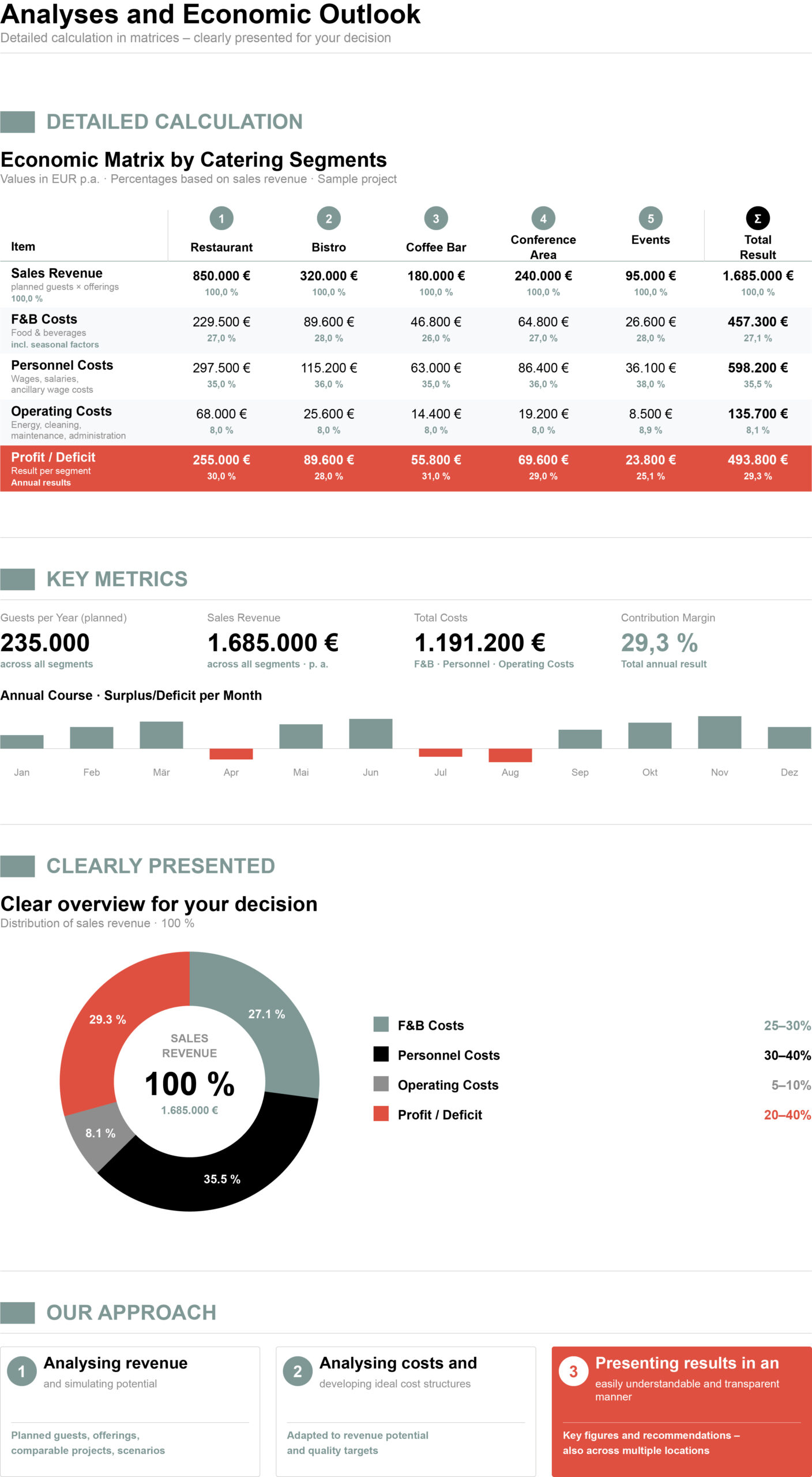
- Forward-looking business calculations (sales revenues, labor costs, cost of goods, ancillary operating costs)
- Competitive and location analyses
- Identification of savings potential in existing operations
- Gastronomy tenders including contract design (landlord exposé or functional service description)
- Consulting on payment and point-of-sale systems
- Training and development programs for the operator
- Coaching during ongoing operations
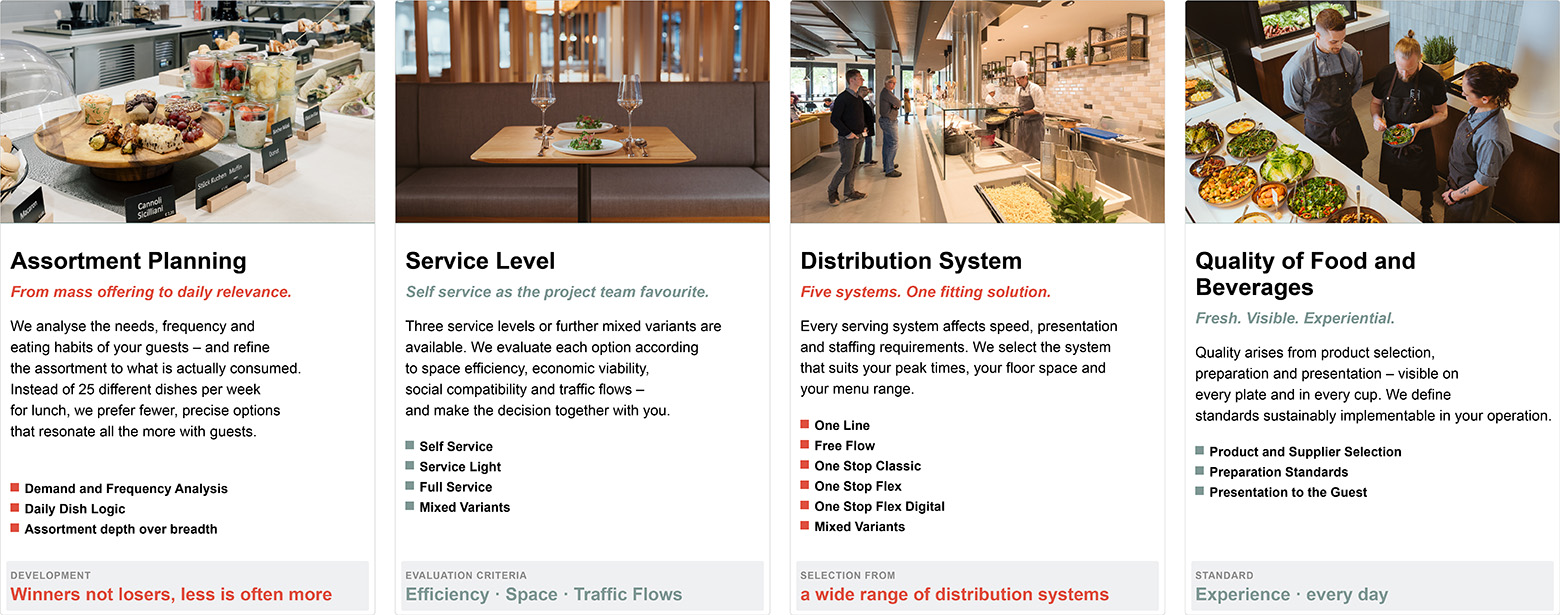
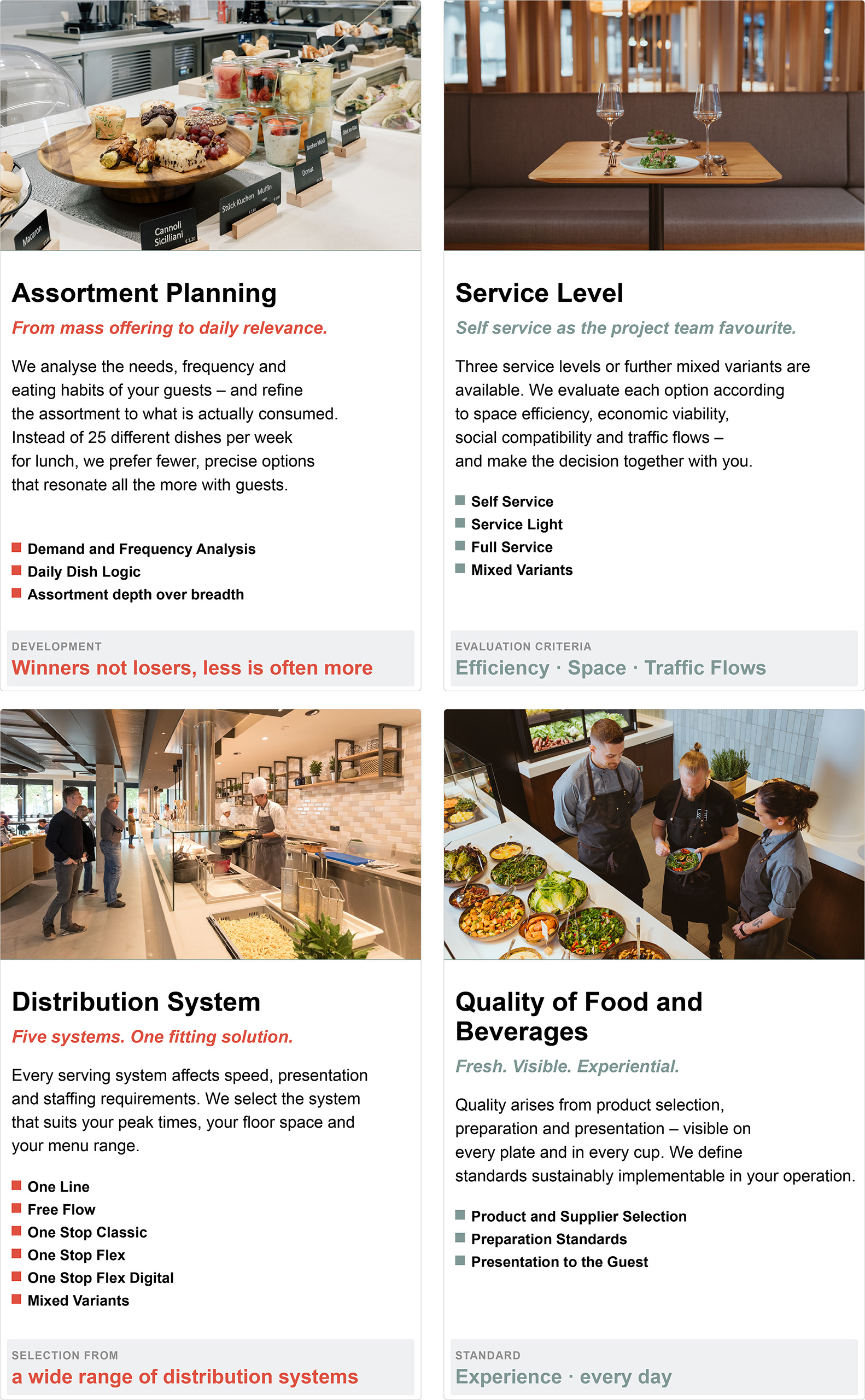
In addition to all fact- and data-driven content, we are of course also happy to develop with you the specific offer of food and beverages as well as the associated service levels. What should be offered where, in what quality, when and how.
Of course, gut feeling plays a central role in gastronomy – not only for guests, because in the end it should simply taste good. For operators, building owners and landlords too, emotions, atmosphere and personal assessments are important factors in decision-making.
But quality can not only be felt, it can also be measured. Economic key figures create transparency, provide orientation and form the framework for sustainable and successful concepts. They help to identify potential early and to make well-founded decisions.
This is precisely why it is crucial to engage intensively with the economic framework conditions before or at the start of a planning project. From location and space analyses to revenue potential to investment and operating costs – we support you comprehensively in creating the right foundations for successful projects.
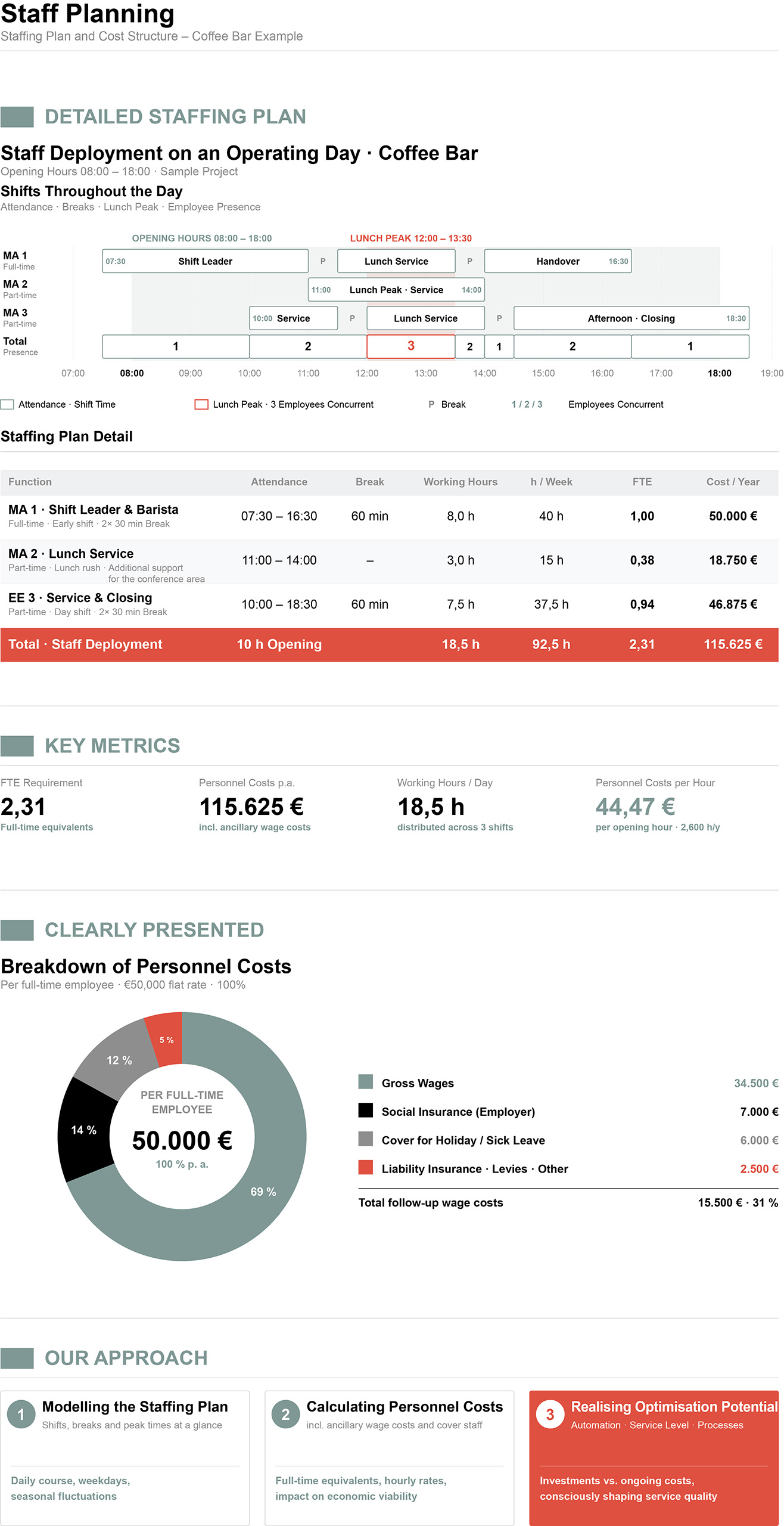
Especially at the beginning of a planning project, it is worthwhile to first look at the most important economic key figures according to the Pareto principle. In gastronomy, personnel costs in particular play a decisive role. They are among the largest cost blocks in many operations and are often only limitedly flexible. Unlike many other cost types, staffing structures cannot be freely adjusted to seasonal fluctuations, days of the week or times of day.
That is why an early look at the expected staffing structures is essential – both for existing operations and for new projects. An economically optimized gastronomy concept is characterized by working with the most efficient staffing structures possible, without compromising quality and service. This is precisely where intelligent processes, automation solutions or the deliberate choice of different service levels can create decisive advantages. Already in an early planning phase, it is possible to see how higher investments in automation can have a positive long-term effect on operating costs. For this reason, we analyze staffing plans at an early stage, compare different approaches and evaluate their economic impact – as an important foundation for sustainable and future-proof gastronomy concepts.
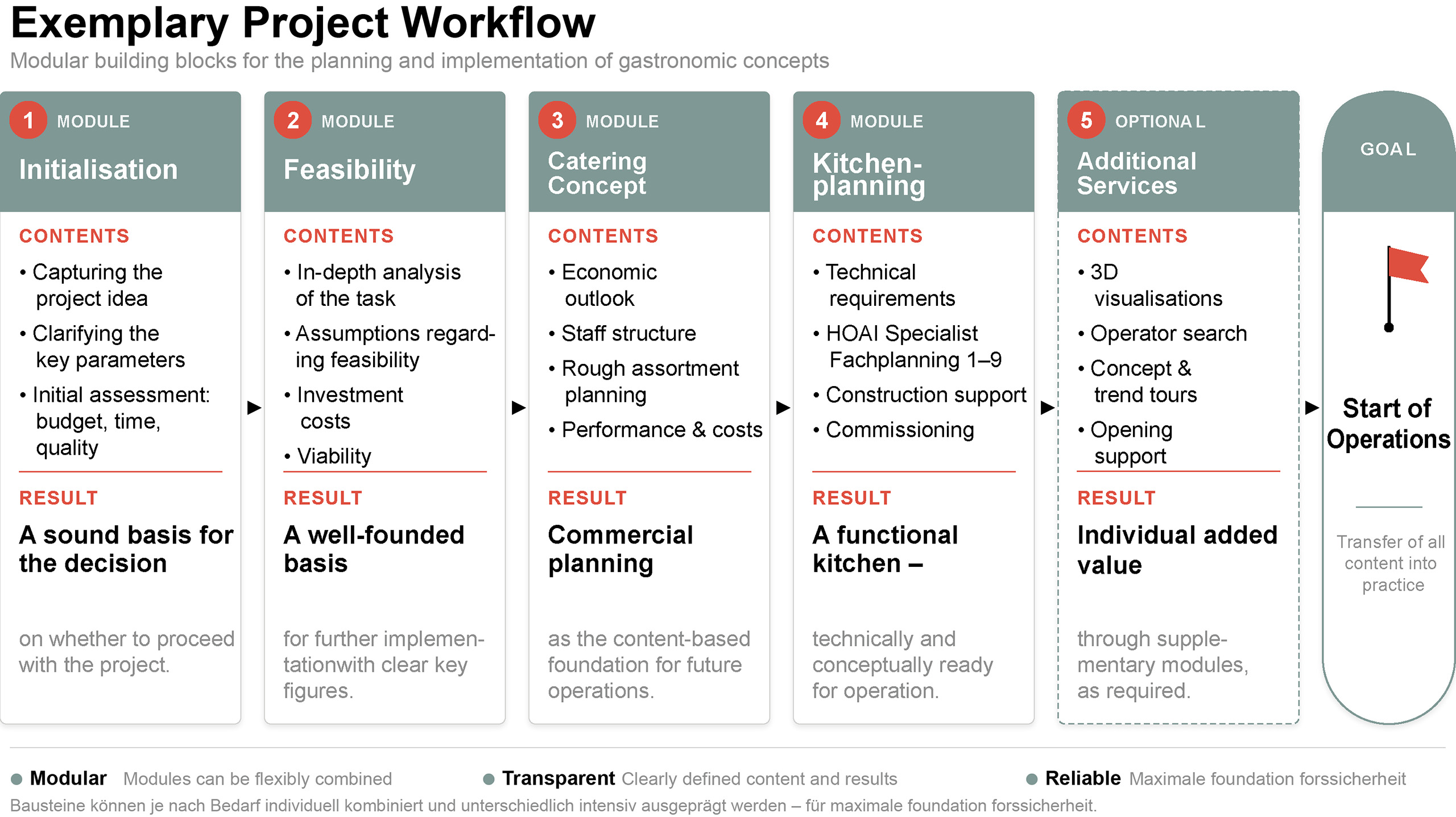
Complex gastronomy projects need structure. That is why we think about them in five modules – individually combinable and precisely tailored to your needs.